What Should Buyers Verify Before Ordering an LED Panel Light Adapter Frame for an Aluminum Honeycomb Ceiling?

Before ordering an LED panel light adapter frame for an aluminum honeycomb ceiling, buyers should verify the light’s actual outside dimensions, required ceiling opening, honeycomb panel thickness, frame-to-panel interface, visible coverage around the cut edge, installation support, ceiling-cavity clearance, finish match and supplied mounting scope. The adapter frame is not simply a decorative border: it has to create a controlled transition between a square LED panel light and a cut opening in the ceiling panel. JXMT’s Kongming Deng Jinxiu White Lighting Aluminum Frame is designed for this role, but the final opening and installation detail should be confirmed from drawings or a sample before panels are cut for production.
The LED Light and the Ceiling Opening Are Two Different Dimensions
A common purchasing mistake is to send only the nominal light size. The outside dimension of an LED panel light, the required ceiling cutout and the visible dimension of the adapter frame are related, but they are not automatically identical.
The buyer should start with the exact light model that will be installed and obtain its dimensioned drawing. The supplier then needs to confirm what ceiling opening is required and how the adapter frame overlaps or covers that opening. If the opening is cut too large, the frame may not conceal the edge as intended. If it is too small, the light or frame may not seat correctly without site rework.
This relationship is especially important in a prefabricated aluminium honeycomb ceiling because the cutout is made in a finished panel rather than in a generic unfinished substrate. Rework can affect the appearance of the panel edge and the alignment of the surrounding ceiling module.
For buyers comparing related products, JXMT’s Ceiling Lighting category provides the appropriate product family. The adapter frame should be selected as part of the lighting-to-ceiling interface, not as an isolated trim chosen after the ceiling panels are already fabricated.
Confirm the Honeycomb Panel Thickness Before Finalizing the Frame Detail
The ceiling panel thickness influences how the adapter frame sits at the opening and how the cut edge is concealed. The product description identifies the Kongming Deng Jinxiu White frame as being specially designed for aluminium honeycomb prefabricated ceilings, but it does not provide a universal panel-thickness range in the available data.
That means the buyer should send the actual honeycomb panel specification and ask for a section detail showing the frame, panel and light together. If the project uses a 7mm panel, a 9mm panel or another system build-up, the supplier should confirm the interface rather than the buyer assuming that one frame condition is interchangeable across all ceilings.
A cross-section drawing is particularly useful here. It should show which surface of the frame remains visible, how the panel cut edge is covered, how the light is retained and where the support or fixing load is transferred.
The Frame’s Job Is to Control the Transition Around the Cut Edge
The target product is described as a minimalist single-layer bevel profile that acts as transition trim around square LED panel light openings and covers plate cuts. This is the central procurement function of the frame.
For that reason, buyers should ask two questions before production: how much visible coverage is available around the opening, and what cut condition the frame expects. The available product data does not state a numerical coverage allowance, so the correct value must come from the supplier’s drawing or approved sample.
A wider visible border can generally tolerate a different visual relationship than a very narrow minimalist edge, but the buyer should not convert that general principle into a guessed cut tolerance. The frame profile, light size and ceiling opening have to be reviewed as one dimensional set.
Verify the Light Support Instead of Assuming the Frame Carries the Load
An adapter frame can define the visible edge of the light opening, but the RFQ should still clarify how the LED panel light is supported. The buyer should not assume that a decorative or transition frame alone is intended to carry the full luminaire load unless the product documentation explicitly says so.
Ask the supplier to show the mounting method and identify which components support the light, which components finish the opening, and which components belong to the ceiling support system. If the light requires clips, brackets, hangers or another retention method, those items should be shown in the installation detail or listed in the supply scope.
This distinction prevents a common interface gap between the ceiling contractor and lighting contractor: one party assumes the frame is structural, while the other assumes the ceiling system provides separate support.
Ceiling-Cavity Clearance Must Be Checked With the Actual Luminaire
The visible frame is only one part of the installed assembly. Above the ceiling, the light body, driver, connector and wiring need adequate space and access. The exact clearance depends on the selected luminaire and its installation instructions, not on the adapter frame name.
Before approving the ceiling opening, compare the light’s depth and driver arrangement with the available ceiling cavity. Confirm whether the driver remains accessible for installation and future service, and whether any adjacent keel, profile or other ceiling component conflicts with the light position.
If the ceiling layout is dense with supporting profiles, air outlets, appliances or multiple lighting modules, a reflected ceiling plan should coordinate those locations before panel cutting begins.
Finish Matching Is a Separate Approval Item
The Kongming Deng Jinxiu White adapter frame is described as being made from thickened 6063 aluminium alloy with an electrostatic powder-coated finish that is intended to resist yellowing and scratching. Its Jinxiu White appearance is positioned to coordinate with the brand’s serial profiles.
For a project, however, a color name alone should not be the final approval standard. The frame sits directly beside the honeycomb ceiling panel and the LED light, so small differences in white tone, gloss or texture may be visible under ceiling lighting.
Request a physical finish sample or assembled sample when appearance consistency is important. Review the frame beside the actual panel finish and, where possible, under the project’s intended lighting condition. If the ceiling uses several white profiles from different product families, include them in the same finish review.
Use the Kongming Deng Jinxiu White Frame as the Product Reference
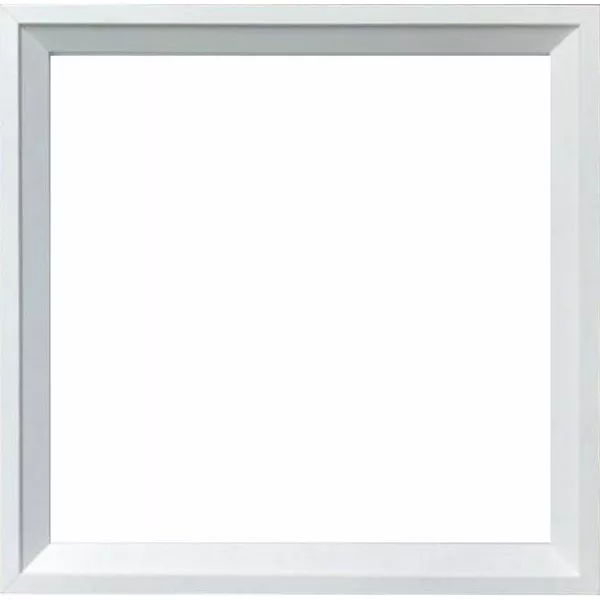
The Kongming Deng Jinxiu White Lighting Aluminum Frame provides the specific product reference for this RFQ. The available product description identifies thickened 6063 aluminium-alloy construction, an anti-yellowing and scratch-resistant electrostatic powder coating, a minimalist single-layer bevel profile, and use as transition trim for square LED panel light openings in aluminium honeycomb prefabricated ceilings.
It is described for minimalist and light-luxury interiors including residential living rooms, entryways, shops and office ceilings. These application descriptions help define the intended visual context, but they do not establish the cutout size or compatibility with every LED panel light.
The practical decision sequence is:
Selected LED panel light → dimensioned light drawing → ceiling panel specification → required opening → adapter-frame interface → support and clearance check → finish/sample approval → panel cutting → order release.
Cutting the ceiling panel before this sequence is completed moves dimensional risk onto the installer.
Interface Verification Matrix
| Interface | Buyer Input | What Must Be Verified | Risk if Unclear |
|---|---|---|---|
| LED panel light | Exact model and dimensioned drawing | Outside size, depth and required mounting condition | Frame selected around the wrong nominal size |
| Ceiling opening | Proposed cutout dimensions | Opening matches the frame and light assembly | Visible gaps or site enlargement/rework |
| Honeycomb panel | Panel thickness and ceiling-system detail | Frame profile fits the actual panel build-up | Poor seating or incomplete edge coverage |
| Frame coverage | Required visible border/edge condition | Frame conceals the intended cut edge | Exposed or uneven panel cut |
| Light support | Required mounting method | Which component carries and retains the luminaire | Unclear installation responsibility |
| Ceiling cavity | Available depth and nearby services | Light body, driver and wiring have adequate space | Interference or inaccessible components |
| Finish | Panel/profile color reference | White tone, gloss and texture are visually acceptable | Visible mismatch in the finished ceiling |
| Supply scope | Required frame, fixing parts and documentation | What is included, optional or supplied by others | Missing installation components |
This matrix should be resolved before the RFQ is converted into a purchase order. It makes the frame an interface component with measurable inputs rather than a decorative item selected by appearance alone.
What Evidence Should the Supplier Return?
The most valuable document is a dimensioned product or installation drawing. Check the profile section, outside dimensions, intended opening relationship and mounting detail. If the drawing does not show the actual LED panel light, request a coordinated sketch that references the buyer’s luminaire dimensions.
A finish sample should be used when color matching is important. For project-specific ceiling work, an assembled mock-up can be even more useful because it reveals the relationship between panel cut, bevel frame, light edge and surrounding ceiling surface.
The supplier response should also identify the supplied parts. If clips, brackets or other mounting pieces are required but not included with the frame, they should appear as separate items rather than being discovered during installation.
Do Not Let Electrical Specifications Blur the Frame RFQ
The adapter frame is a mechanical and visual interface around the luminaire opening. Electrical parameters such as wattage, driver input, color temperature or dimming belong to the selected LED light, not automatically to the frame.
They still matter for overall ceiling coordination because the light body and driver affect cavity space and access. Keep the responsibilities separate in the RFQ: one section should define the adapter frame and opening; another should identify the luminaire model whose dimensions and service needs control the interface.
This separation prevents the supplier from receiving an ambiguous request such as “white frame for 300×300 LED light” without the actual light drawing.
What Should Be Included in the Final Adapter-Frame RFQ?
- Exact LED panel light model and dimensioned drawing.
- Honeycomb ceiling panel thickness and product reference.
- Required ceiling opening or request for supplier-recommended opening dimensions.
- Ceiling-system section showing panel, support and nearby profiles.
- Required visible frame/edge appearance.
- Finish and color sample requirement.
- Ceiling-cavity depth and any known interference constraints.
- Required mounting method and responsibility for luminaire support.
- Quantity and required packing.
- Requested supplier drawing, sample or mock-up for approval.
- A list of included parts, optional parts, deviations and buyer-supplied items.
JXMT’s company profile states that specifications, drawings, samples and project product-selection discussions can be supported. Once the light model and ceiling-panel information are available, submit the coordinated inputs through the project inquiry page and ask for the adapter-frame drawing to be confirmed before ceiling panels are cut.
Three Practical Questions Buyers Often Miss
Should the ceiling opening be cut before the adapter frame is approved?
No project should assume that the nominal light size equals the required panel opening. Approve the frame-to-light and frame-to-panel dimensions first, then release the cutout to production.
Is a white color name enough for finish approval?
Not when the frame sits directly beside a white honeycomb panel or other white profiles. A physical sample or coordinated finish approval is safer because tone, gloss and texture can affect the installed appearance.
Does the adapter frame automatically support the LED panel light?
Do not assume so. Request the installation detail and identify which component carries the luminaire load, which component retains it and which component only finishes the visible opening.
A correctly specified LED panel light adapter frame reduces uncertainty at one of the most visible ceiling interfaces. The buyer’s goal is to freeze the light dimensions, panel condition, opening, support and finish before cutting and ordering—not to solve those relationships after the ceiling arrives on site.