How Should Contractors Specify a Ceiling Light Cove for LED Strips in Aluminum Honeycomb Ceiling Projects?
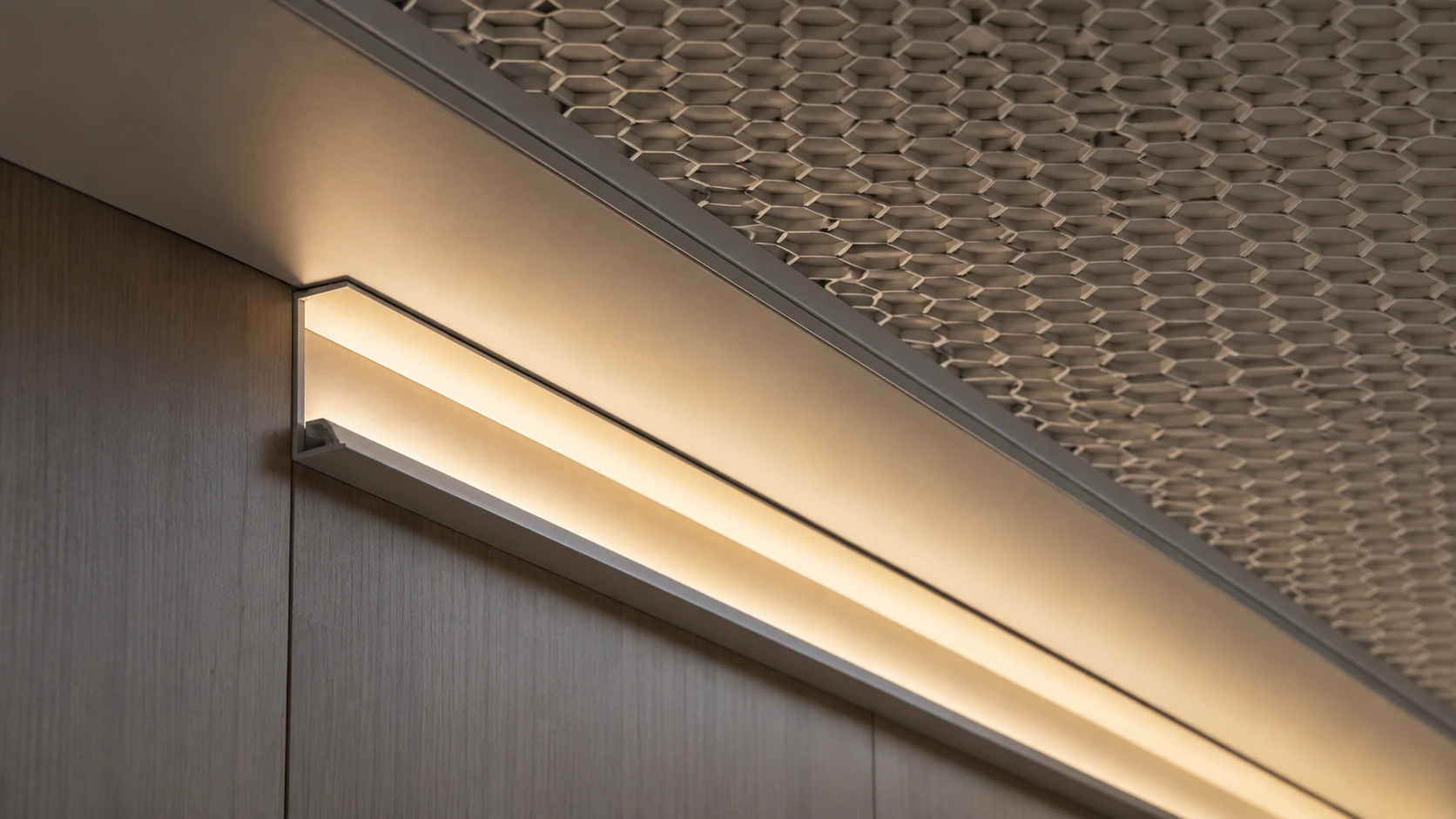
Direct Answer: Contractors should specify a ceiling light cove for LED strips from the complete installation interface: ceiling geometry, honeycomb panel thickness, profile section, LED strip width, light-emitting direction, corner treatment, diffuser or light channel, wiring access, cutting lengths and connection details. A profile that physically accepts an LED strip is not automatically compatible with the ceiling system or the intended lighting effect. Buyers should approve a profile section and installation node before ordering bulk lengths.
For hotel, retail, residential and commercial ceiling projects, concealed lighting is often treated as a finishing detail. In practice, it affects both the ceiling structure and the electrical layout.
JXMT’s Two-Level Ceiling Light Cove range includes aluminum profiles for ceiling transitions and integrated light channels. The contractor should select from this product family only after the project drawing defines where the light line sits and how the surrounding honeycomb panels terminate.
Why Should the Light Cove Be Specified Before the Ceiling Is Produced?
A light cove changes the geometry of the ceiling.
It can affect:
- ceiling level;
- panel dimensions;
- profile quantities;
- panel termination;
- LED strip position;
- wiring routes;
- corner construction;
- access for installation and replacement;
- the direction in which light is emitted.
If the lighting design arrives after panel cutting, the contractor may need to recut panels or create site-built transitions that differ from the original ceiling system.
Industry experience point: A lighting drawing and a ceiling drawing that are developed separately can both look correct while still creating an impossible installation node.
Which Measurements Should Contractors Put on the Detail Drawing?
Do not issue an RFQ that says only:
LED light cove, 100 meters.
The supplier needs the profile function and interface.
A useful drawing should show:
| Dimension / Detail | Why It Matters |
|---|---|
| Ceiling level difference | Determines transition/profile geometry |
| Panel thickness | Controls the panel/profile interface |
| Cove width and depth | Defines available installation space |
| LED strip width | Must fit the specified light groove |
| Light direction | Determines whether the profile emits downward, inward or in multiple directions |
| Corner type | Controls internal/external corner treatment |
| Profile cut length | Supports quantity and installation planning |
| Wiring route | Prevents inaccessible driver or cable locations |
| Visible finish | Coordinates profile with surrounding ceiling |
The profile section drawing is more useful than a product photo because it shows where the honeycomb panel, LED strip and structural interface actually sit.
How Should the LED Strip Match the Aluminum Profile?
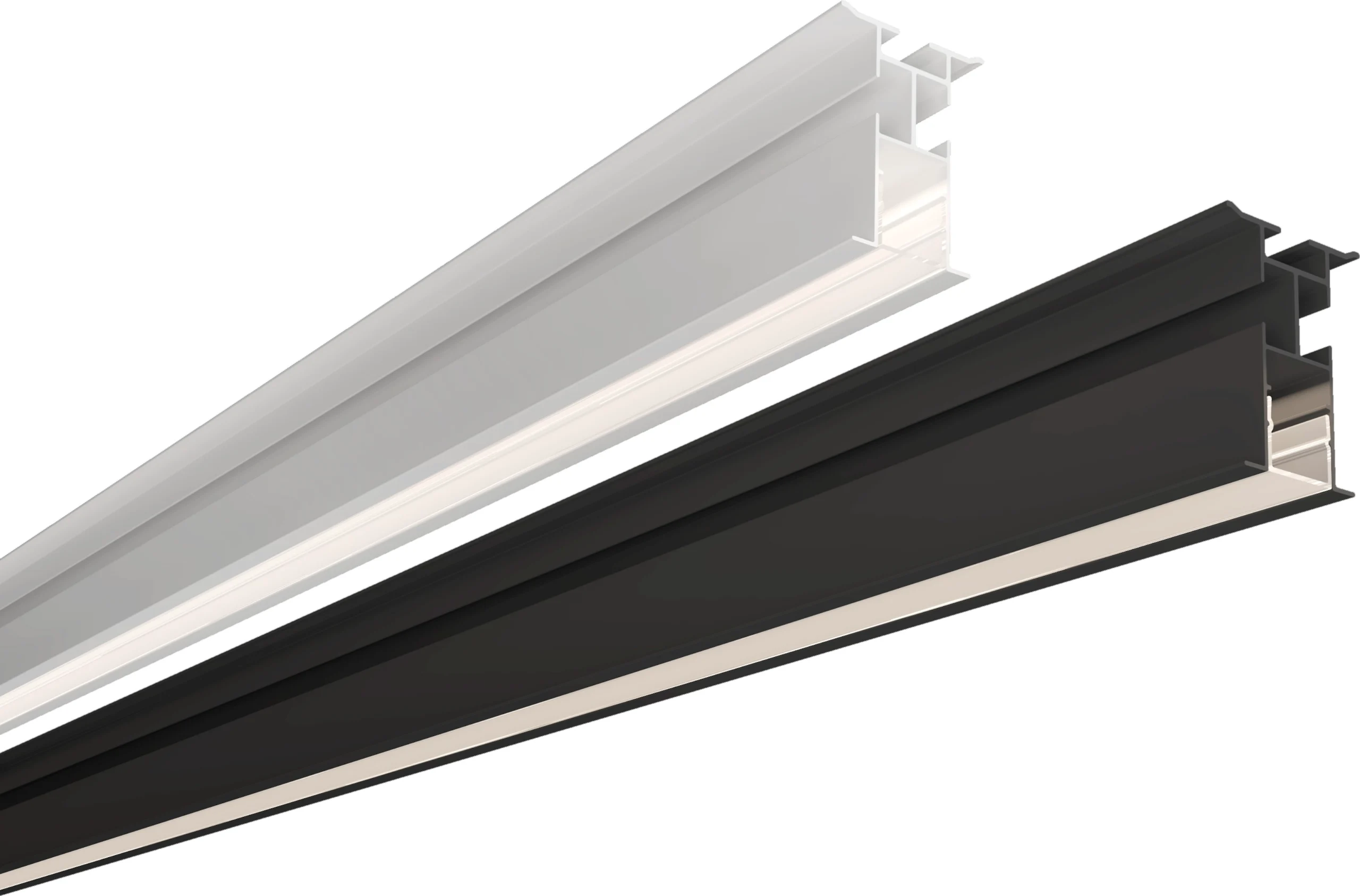
The LED strip groove should be verified against the actual strip selected for the project.
Contractors should confirm:
- strip width;
- electrical configuration;
- required mounting space;
- cable entry;
- diffuser or cover arrangement where applicable;
- bend or corner limitations;
- replacement access.
JXMT’s XF-F21S Illuminated Quick Installation Keel is one product record that explicitly identifies a built-in 15 mm light-strip groove.
That specification is useful because it creates a measurable compatibility field. It should not, however, be generalized to every JXMT lighting profile.
Industry experience point: “For LED strip” is not a dimensional specification. A groove and a strip can both be called standard while still having different widths.
What Is the Difference Between a Light Cove and an Illuminated Keel?
The two can create linear lighting, but they do not necessarily perform the same ceiling function.
An illuminated keel may be positioned along a panel joint and combine panel connection with linear lighting.
A light-cove or two-level profile may form a larger ceiling transition or decorative edge and create concealed light from that change in level.
For example, the XF-F21S product combines a quick-install keel function with a light-strip groove. By contrast, products in the Two-Level Ceiling Light Cove category are designed around ceiling transition and decorative lighting structures.
Contractors should decide whether the project needs:
- a lit panel joint;
- a perimeter cove;
- a ceiling-level transition;
- an external-corner light profile;
- a decorative multi-layer profile.
These should not be substituted only because they all contain an LED groove.
How Should External Corners Be Specified?
Corners expose profile mismatches quickly.
A continuous straight cove can normally be cut from long profiles, but an external or internal corner introduces:
- visible joint alignment;
- light continuity;
- mitre or dedicated corner construction;
- strip routing;
- profile cut tolerance;
- finishing.
JXMT’s 2204 Double Eyelid Dual Glowing External Corner Profile is described as an external-corner profile with two separate light channels for low-voltage LED strips.
That makes it a useful reference where the design intentionally requires a double-light external-corner effect.
It should not be selected simply because the room has a corner. The contractor should first confirm whether the lighting concept actually calls for dual-side illumination.
Industry experience point: Site-cut mitres that are acceptable on an ordinary trim can become very visible once a continuous LED line highlights the joint.
Should the Light Cove Match the Honeycomb Panel Color?
The visual relationship should be approved by the project designer, but buyers should distinguish between color coordination and dimensional compatibility.
First confirm:
- panel thickness and profile fit;
- profile geometry;
- lighting requirement;
- ceiling level;
- installation method.
Then confirm:
- profile finish;
- panel finish;
- diffuser appearance;
- visible joint width.
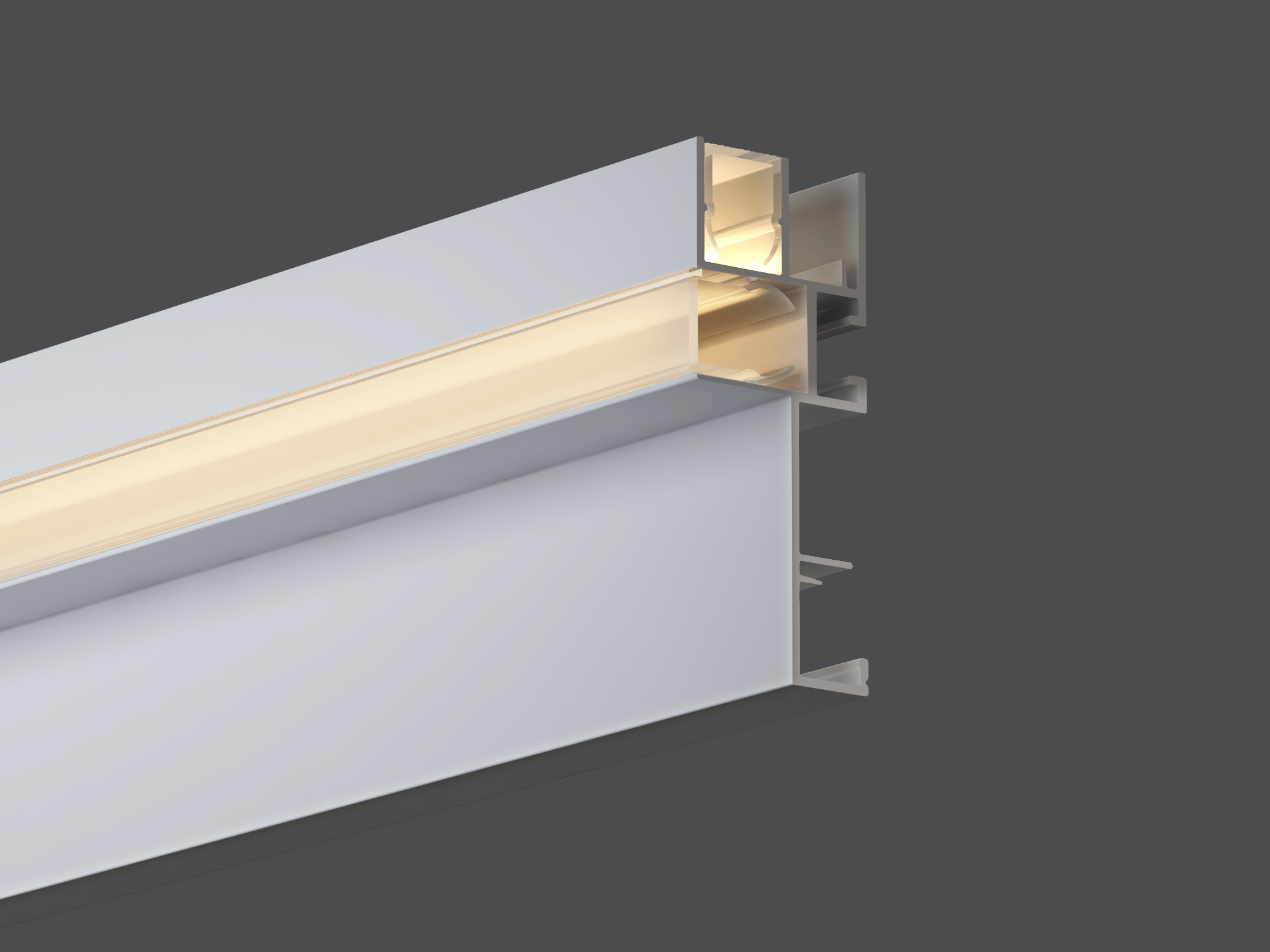
JXMT also lists the 150 Rainbow Splendid White Ceiling Aluminum Profile, which combines a ceiling profile with an integrated lighting channel.
Different profile shapes produce different visual effects, so color alone should not decide the profile.
How Should Contractors Coordinate the Light Cove With Ceiling Lighting?
The light cove is normally ambient or indirect lighting. It may still need to work alongside task or general lighting.
The Ceiling Lighting category contains recessed and integrated ceiling lighting products for honeycomb ceiling applications.
A lighting plan should therefore separate:
- indirect LED cove lighting;
- linear panel-joint lighting;
- recessed ceiling lights;
- accent lighting;
- ceiling appliances that include lighting.
This prevents the LED cove from being expected to perform a lighting function for which the overall project has not been designed.
What Causes Uneven or Interrupted Linear Lighting?
When buyers complain about a light line after installation, the LED strip itself may not be the only cause.
Common problems include:
- inconsistent profile depth;
- poorly aligned joints;
- corner gaps;
- LED strip not seated consistently;
- mismatched diffusers;
- voltage or electrical issues;
- interrupted strip runs;
- uneven transition between straight and corner profiles.
For procurement, the profile-related risk can be reduced by approving:
- the profile section;
- one straight sample;
- one joint;
- one typical corner;
- the selected strip width.
Industry experience point: A straight one-meter sample is not enough when the project includes long continuous runs and multiple corners.
Scenario: The LED Strip Fits, but the Ceiling Detail Does Not
Representative scenario — not a claimed JXMT customer case.
Business Background:
A contractor is installing an aluminum honeycomb ceiling with concealed linear lighting around the perimeter of a retail space.
Problem:
The selected aluminum profile accepts the LED strip, but the panel edge does not lock correctly into the profile. At the external corners, installers have to cut improvised joints, creating visible breaks in the light line.
Cause:
The purchasing team checked LED groove width but did not confirm honeycomb panel thickness, panel termination or corner construction.
Solution:
The contractor freezes one section detail showing panel thickness, profile code, light groove, ceiling level, wiring route and corner method. A straight section and corner sample are approved before the bulk profile order.
Buyer Decision Value:
The buyer evaluates the light cove as a ceiling-system interface instead of purchasing it as an isolated aluminum LED channel.
What Should Be Included in a Ceiling Light Cove RFQ?
| RFQ Field | Buyer Information |
| Project application | Hotel, retail, residential, office, showroom, etc. |
| Ceiling type | Aluminum honeycomb ceiling and selected panel thickness |
| Drawing | Reflected ceiling plan and section details |
| Cove type | Perimeter, two-level, corner, illuminated keel or other |
| Profile section | Requested or supplier-proposed profile |
| LED strip | Strip width and project electrical specification |
| Light direction | Downward, inward, dual-side or other intended effect |
| Corners | Number of internal/external corners and required treatment |
| Finish | Required profile color/surface |
| Length schedule | Straight lengths by zone |
| Accessories | Diffuser/cover and other required pieces where applicable |
| Sample | Straight section and corner sample if required |
| Packaging | Bundle identification by area or profile code |
| Destination | Project country/port |
The supplier should identify any profile, LED or panel interface that still requires confirmation.
Frequently Asked Questions
What is a ceiling light cove?
It is a ceiling detail designed to create a concealed or integrated lighting zone, commonly using LED strips inside or behind an aluminum profile.
Can any LED strip fit an aluminum ceiling light cove?
No. Confirm the actual light-groove width and the selected strip dimensions before ordering.
Is a light-emitting keel the same as a ceiling light cove?
Not necessarily. A light-emitting keel may combine panel joining and lighting, while a light cove can form a perimeter or multi-level ceiling transition.
Should light cove profiles be selected before honeycomb panels?
The two should be coordinated together. Panel thickness, layout and ceiling level affect the profile interface.
How should external corners be handled?
Use the approved profile and corner method shown in the project detail. Confirm whether the corner is site-mitred or uses a dedicated compatible profile.
Why does a continuous LED line show installation errors easily?
Light emphasizes joint gaps, profile misalignment and inconsistent transitions, so straight-run and corner quality becomes more visible after illumination.
What should contractors send before requesting a quotation?
Send the ceiling plan, section, honeycomb panel thickness, light-cove location, LED-strip dimensions, corner quantities, finish, lengths, sample requirement and destination.
Approve the Ceiling Node Before Ordering Bulk Profiles
For a ceiling-light-cove quotation, send JXMT the ceiling drawing, honeycomb panel thickness, cove geometry, LED-strip width, lighting direction, corner details, profile finish, lengths, quantities and destination.
Use the JXMT Contact Us page to submit the project information so the ceiling-profile and lighting interfaces can be reviewed before bulk production.