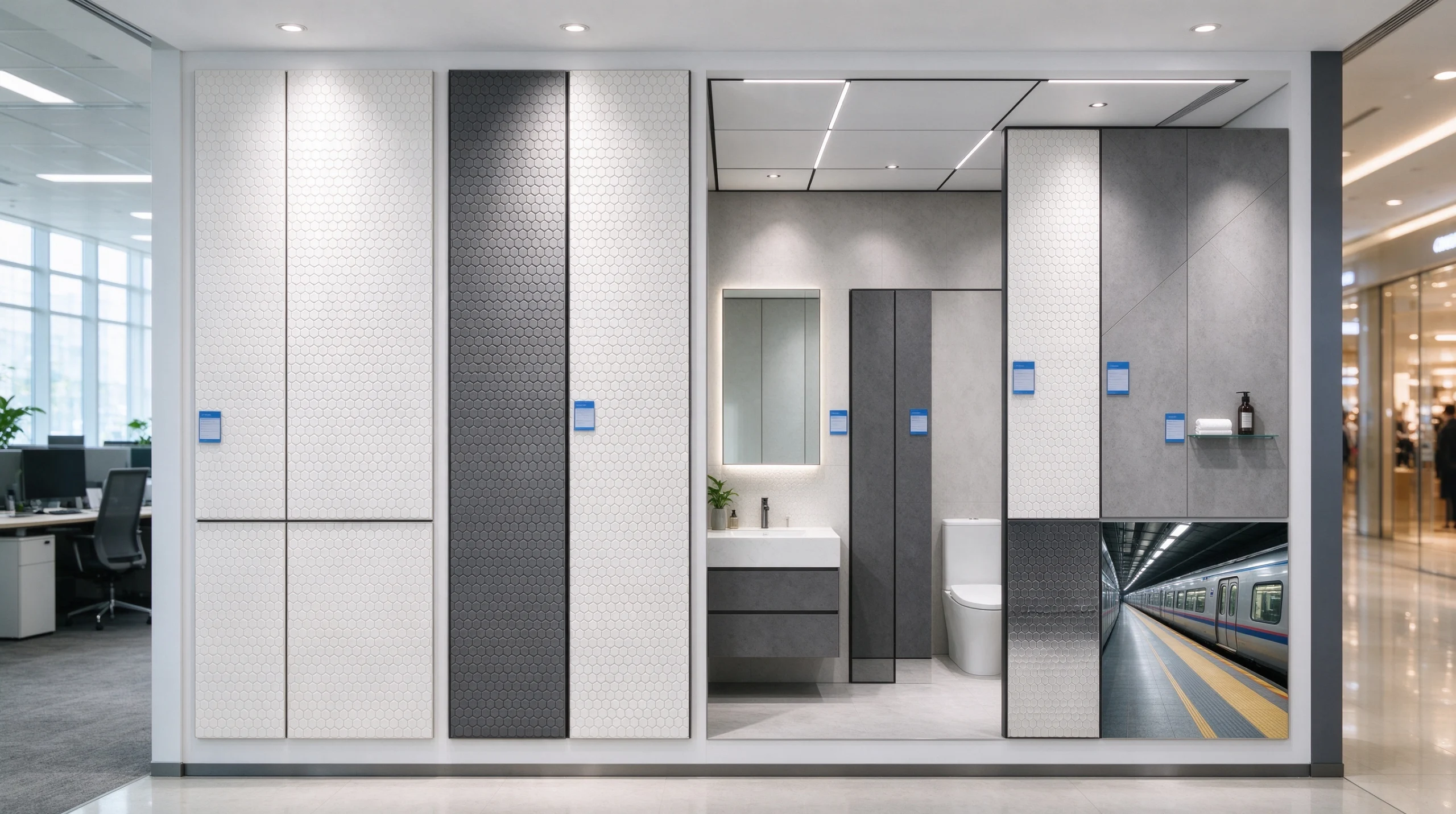
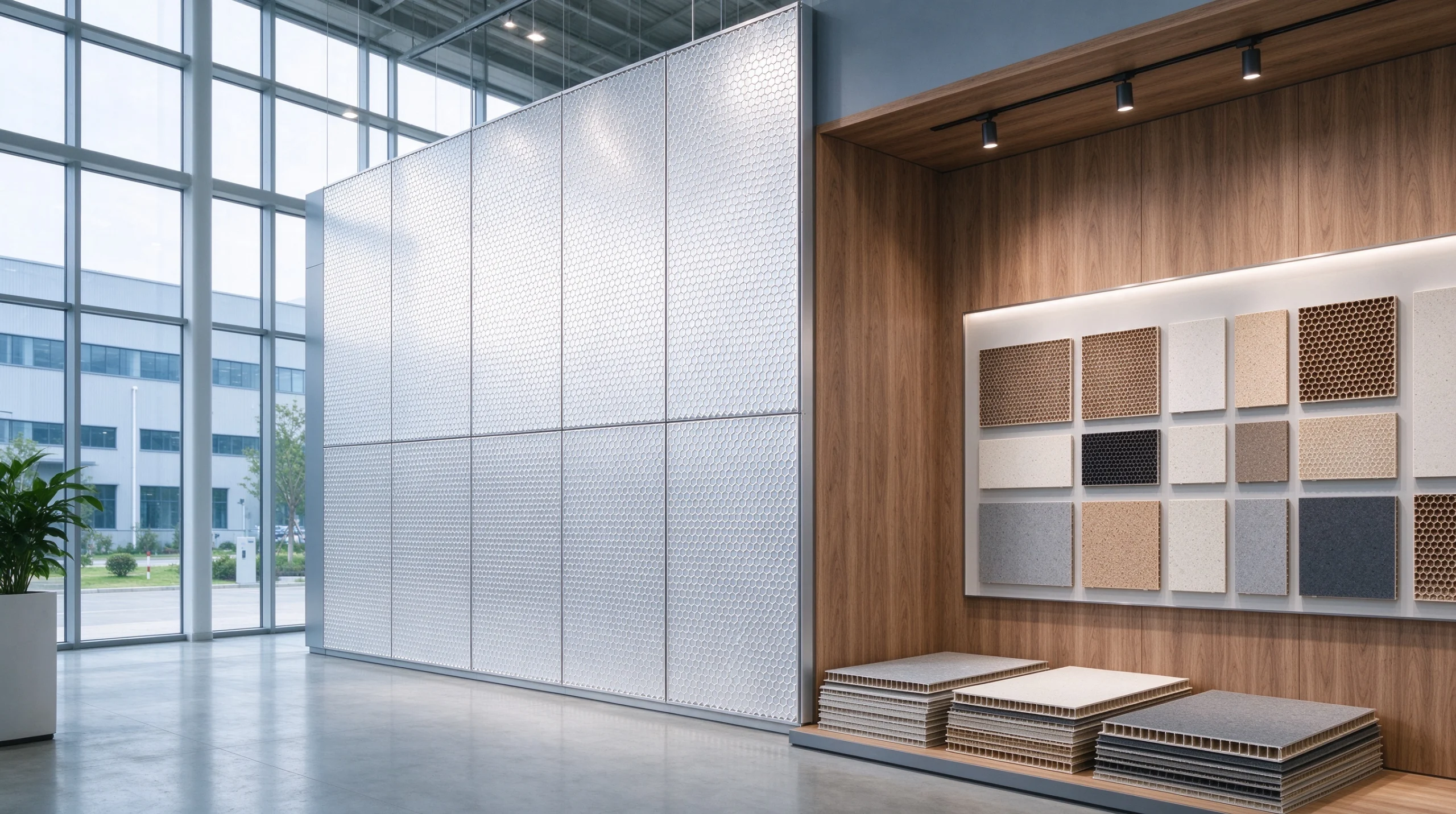
What Should Buyers Check Before Ordering a White Sand Texture 7mm Aluminum Honeycomb Panel?
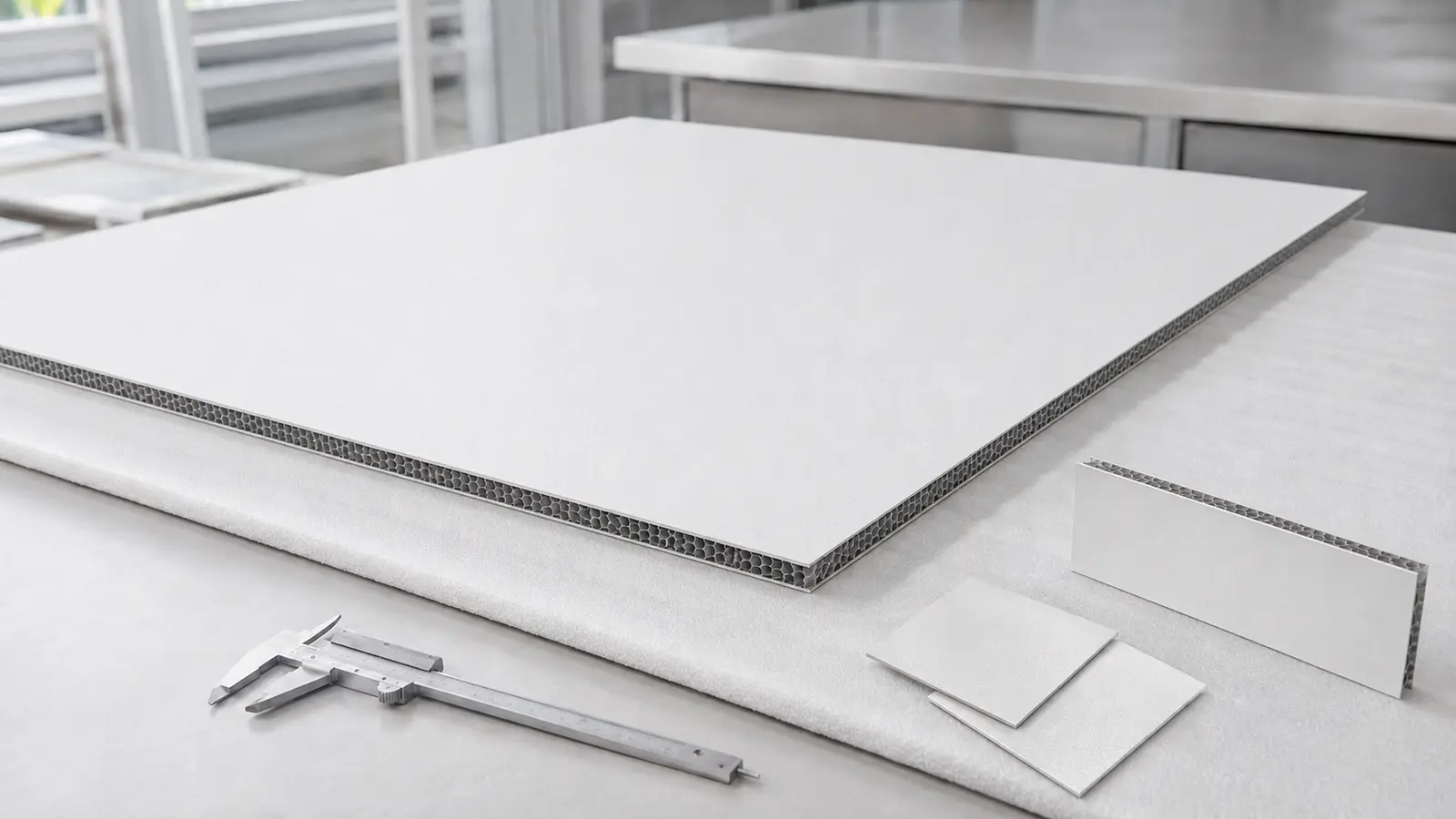
Before ordering a white sand texture 7mm aluminum honeycomb panel, buyers should confirm the approved surface reference, finished panel dimensions, complete build-up, joint pattern, edge treatment, support-system interface, cut-outs, inspection method and packing plan. The words “white,” “sand texture” and “7mm” identify a product direction, but they do not provide enough information for production. A reliable purchase specification connects the visual sample to a controlled panel schedule and defines what evidence will be reviewed before shipment.
This distinction matters because a light matte surface can look different under warm and cool lighting, while a nominal panel thickness does not describe every layer of the construction. The quotation should therefore state what is offered, what remains subject to engineering review and what the buyer must approve. Clear records reduce quotation gaps, avoid late drawing changes and give the project team a practical basis for receiving inspection.
Start with the intended ceiling or wall application
The same finish can perform very differently depending on where it is installed. A residential kitchen ceiling, a retail display area and a commercial corridor do not have the same module layout, service access, lighting or cleaning expectations. The RFQ should identify the installation zone, room dimensions, finished ceiling height, substrate or suspension arrangement, access requirements and whether the panels continue onto a wall or feature surface.
State whether the project is new construction, refurbishment or replacement. Existing projects may impose fixed support spacing, perimeter levels or service locations that cannot be moved. New projects offer more freedom, but the panel, profiles, lights, access panels and mechanical services still need one coordinated layout. If the supplier only receives a room area in square metres, it cannot reliably identify perimeter pieces, special cuts or the number of panel types.
Buyers reviewing JXMT’s aluminum honeycomb panel product range should use the category as a starting point, then connect the selected finish to the actual architectural zone. Product-family information helps with initial screening; the project drawings determine what must be fabricated.
Define what “white sand texture” means for acceptance
Finish descriptions are useful for communication, but production and inspection need a physical or controlled visual reference. Ask the supplier to provide a representative finish sample and identify its sample code, date and approval status. The buyer should record whether the sample controls colour, gloss, texture, grain scale or all four characteristics.
Review the sample under lighting similar to the finished space. A soft white surface may appear warmer beside timber finishes, cooler beside grey stone and brighter under high-output linear lighting. Directional light can also reveal small differences in texture that are less visible under diffuse daylight. For large connected ceilings, assess several samples together rather than approving one small piece in isolation.
Do not approve colour from a screen image alone. Photography, monitor settings and compression can change the appearance of whites and low-contrast textures. A digital image can help select candidates, but it should not replace the agreed sample where visual uniformity is important. If production batches may be separated, the RFQ should ask how batch identification and finish consistency will be managed.
Separate nominal thickness from the offered panel build-up
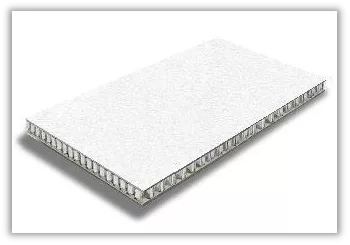
The 7mm designation describes the overall product direction, not every component that affects weight, rigidity, edge behaviour or fabrication. The quotation should identify the offered overall thickness, face sheet, back sheet, core construction, bonding method and any edge or insert treatment relevant to the project. Buyers should not assume an alloy, sheet gauge or adhesive type that is not stated in the confirmed product data.
This is especially important when comparing suppliers. Two quotations can both say “7mm aluminum honeycomb panel” while offering different face-sheet gauges, back sheets, core configurations, tolerances or edge details. A price comparison is meaningful only after the offered constructions are shown in the same format. If a field is not available at the quotation stage, it should be marked for confirmation rather than left blank.
The White Sand Texture 7mm Aluminum Honeycomb Panel provides the correct product-detail reference for this article. Buyers should still request the current offered configuration for their dimensions and application because a product-page name is not a substitute for a project-specific quotation.
Build a panel schedule before requesting a final price
A panel schedule turns an architectural layout into a manufacturable order. Give every panel type a unique code and list the finished width, finished length, quantity, location, orientation and edge condition. Separate standard field panels from perimeter pieces, service panels, access panels and panels with openings. If site dimensions are not final, state when measurement will occur and who is responsible for releasing production dimensions.
Drawings should distinguish visible joint width from the underlying support or connection detail. A narrow visual joint may still require a specific profile, tolerance and installation sequence. Show where joints must align with lights, ventilation grilles, sprinklers, detectors or wall lines. Uncoordinated service openings are a common reason for on-site cutting, damaged finishes and inconsistent edges.
For repeated rooms, do not assume one schedule fits every area. Small differences in wall position, column size or equipment layout can change perimeter panels. A room-by-room or zone-by-zone quantity list makes packing, installation and replacement easier. It also helps the buyer identify where spare panels are required and whether those spares need the same batch and finish reference.
Confirm support, perimeter and service interfaces
A ceiling panel is one part of a system. The RFQ should show how panels engage with keels, connectors, trims and perimeter conditions. Identify the support spacing, panel engagement method, joint profile, wall termination and any change in level. Where a ceiling meets another material, provide a section detail instead of relying on a general note.
Service integration deserves its own review. State which openings are factory-made and which, if any, may be cut on site. Provide dimensions, coordinates, corner radii and reinforcement requirements for each opening. The lighting or appliance supplier should confirm the required clear opening, flange coverage, support and maintenance access. A panel supplier cannot infer these dimensions safely from a product name.
For refurbishment, photograph and measure the existing support conditions after removing enough of the old finish to see the real interface. Concealed conditions may differ from drawings. Record any corrosion, uneven levels, obstructions or services that could affect the new layout. These observations should be resolved before panels are released for fabrication.
Request evidence that matches the project requirement
Buyers often ask whether an aluminum honeycomb panel is fire-resistant, moisture-resistant or suitable for a particular environment. These questions cannot be answered responsibly by the base metal alone. The relevant evidence depends on the complete panel construction, finish, installation method, test method and project acceptance criteria.
If the project has a mandatory fire classification, environmental requirement or local code condition, state it in the RFQ and ask for documents that identify the tested specimen and scope. Do not accept a general material statement as proof for every panel assembly. The project team should check whether the offered construction is the same as, or legitimately covered by, the evidence provided.
For humid or frequently cleaned areas, define the real exposure and cleaning method. Ask how edges, cut-outs, interfaces and protective film will be handled, because these details can matter as much as the visible face. Avoid turning a general product description into a blanket warranty for conditions that have not been reviewed.
Agree on samples and inspection before production
A sensible approval path usually moves from a finish sample to a representative panel sample and, for visually important areas, a small mock-up. The finish sample confirms appearance. The panel sample helps review thickness, edge treatment and handling. A mock-up can reveal how joints, lighting, profiles and adjacent materials work together.
The inspection plan should define measurable and visual checks. Typical fields include finished length and width, overall thickness, squareness, surface condition, edge quality, opening position, panel code, quantity and packing label. Visual acceptance should state the viewing distance, lighting and orientation. Extremely close inspection under unusual lighting can produce disputes that do not reflect the installed surface, while a vague “looks acceptable” rule is too subjective.
Agree on the response to nonconformity. Depending on the issue, the supplier may sort, repair, remake or request a written concession. Affected panel codes and quantities should be traceable. The buyer should not approve an undocumented substitution simply to protect the delivery date.
Compare quotations on the same commercial boundary
Ask each supplier to return a structured quotation rather than a single unit price. The offered product build-up, finish reference, panel dimensions, special fabrication, accessories, sample scope, documentation, inspection, packing, delivery basis and exclusions should be visible. If tooling, mock-ups, spare panels or service openings are priced separately, identify them consistently across offers.
Quantity should be divided into standard panels, special panels, profiles or accessories and spares where applicable. State the destination and unloading constraints so the supplier can review package dimensions and handling. A low panel price can become expensive if cut-outs, edge details, protective packing or compatible profiles are excluded.
Commercial comparison should also record validity, payment terms and the point at which dimensions and samples become frozen. Lead time should be linked to a clear starting event, such as approval of drawings and finish samples, rather than an undefined order date. This makes schedule discussions more realistic without inventing a universal production period.
Protect panels through packing and installation
Light-coloured matte panels need surface protection from factory handling through final installation. The packing plan should cover protective film, interleaving, corner protection, edge protection, crates or pallets, moisture control and package labels. Labels should identify the project, zone, panel code and package number without damaging the finish.
For multi-room projects, sequenced packing can reduce unnecessary handling. Installers should not need to open every package to find one perimeter panel. The buyer should tell the supplier whether packages will be unloaded by forklift, crane or manually and whether site access limits package size or weight.
Define when protective film is removed and when the installed surface is inspected. Removing it too early can expose panels to other trades; leaving it too long can conceal damage or complicate final cleaning. The installation method should coordinate film removal, inspection and temporary protection.
Frequently asked ordering questions
Is “7mm” enough information for a purchase order?
No. It does not define the full layer construction, gauges, core, bonding, tolerances, edge treatment or finish reference. The purchase order should incorporate the accepted quotation, panel schedule and approved sample.
Can the white finish be approved from a website photograph?
No. A website image is useful for preliminary selection, but screen settings and photography can change white balance, gloss and texture. Use a controlled physical sample where appearance is part of acceptance.
Should openings be cut at the factory or on site?
That depends on measurement certainty, service coordination and the approved edge detail. Factory cutting can improve repeatability when coordinates are frozen; site cutting may be necessary where conditions remain uncertain. The responsible party and acceptance method should be written.
Can a general material certificate prove project compliance?
Not by itself. Project compliance may depend on the complete panel assembly, finish, installation and applicable test or code. Review the document scope against the offered construction and project requirement.
Send an RFQ that the supplier can review accurately
The final RFQ should include the drawing register, panel schedule, finish sample reference, requested construction, joint and perimeter details, service openings, support information, evidence requirements, inspection rules, quantity, spares, packing method, destination and delivery basis. Ask the supplier to state every offered field and return a numbered deviation list.
Buyers can send these details through JXMT’s honeycomb panel project quotation form. Include the application, dimensions, quantity, finish and destination, then attach or reference the current drawings. A final price should be compared only after the white sand texture reference, panel configuration and project interfaces have been aligned.